
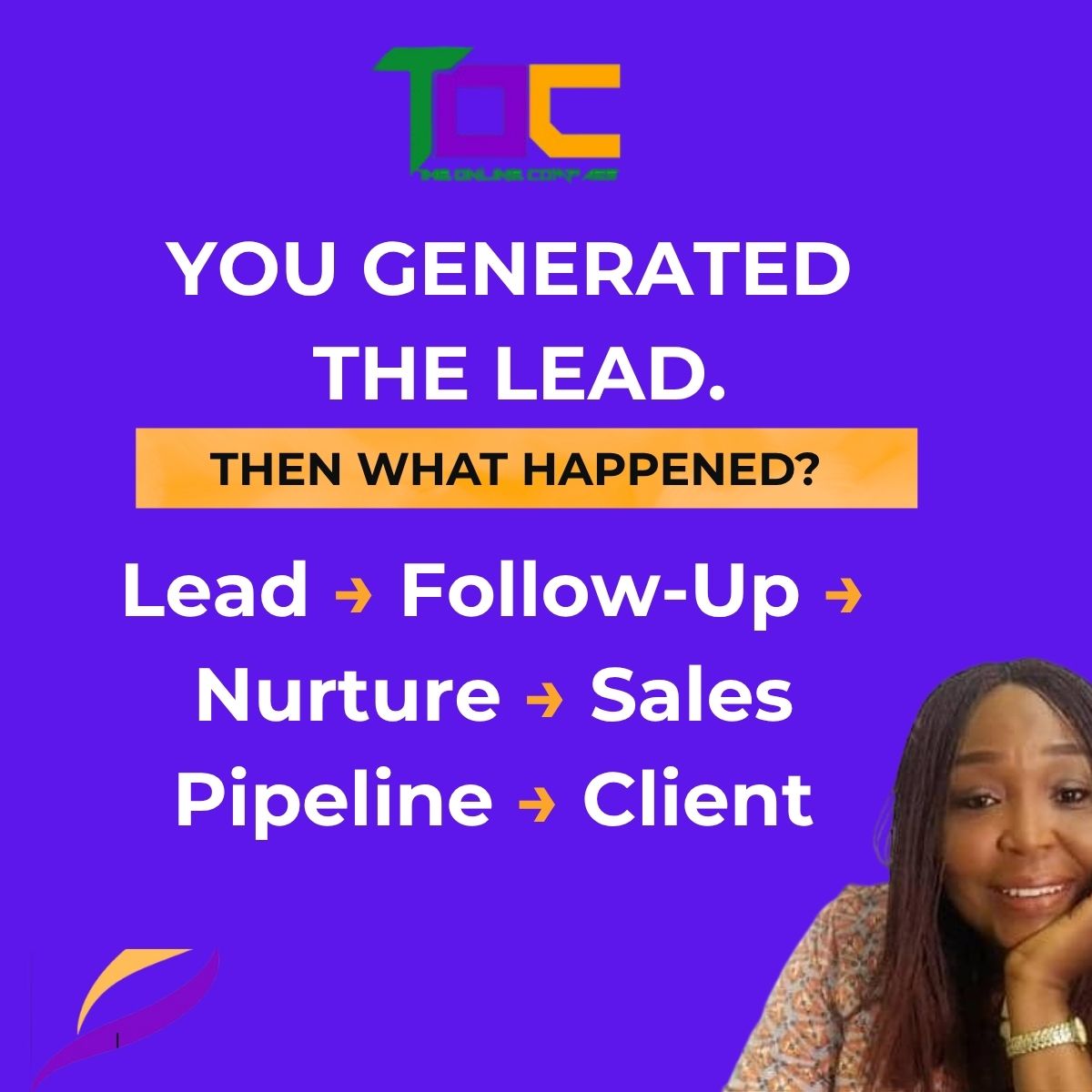
Getting a lead can feel like a win.
Someone fills out your form.
Someone sends a WhatsApp message.
Someone asks for your price.
Someone books a call.
Someone says, “I’m interested.”
But here is the part many businesses don’t talk about:
Getting the lead is only the beginning.
I have seen businesses put a lot of effort into generating enquiries, only for those enquiries to
disappear somewhere between the first conversation and the sales process.
Sometimes the business doesn’t need more leads.
It needs to stop losing the ones it already has.
What does it actually mean when businesses lose leads?
There is a bigger question behind this:
What happens after someone discovers your business?
Getting attention, website visitors or social media engagement doesn’t automatically create customers. The journey from visibility to becoming a client has several stages, and a gap in one of those stages can affect everything that comes after it.
I explored this in more detail in Why Your Business Gets Visibility but Still Struggles to Get Consistent Client, where I break down what needs to happen after someone notices your business.
A business can lose a lead without the person ever saying, “I’m no longer interested.”
The lead may simply stop hearing from the business.
Or the business may forget to follow up.
Or nobody knows who is responsible for the enquiry.
Or the lead’s information is sitting inside someone’s WhatsApp.
Or the sales team doesn’t know whether the person is a new enquiry, a qualified prospect, or someone who is already close to buying.
This is why lead generation and lead management are two different problems.
You can be good at getting attention and still be poor at managing the interest that attention creates.
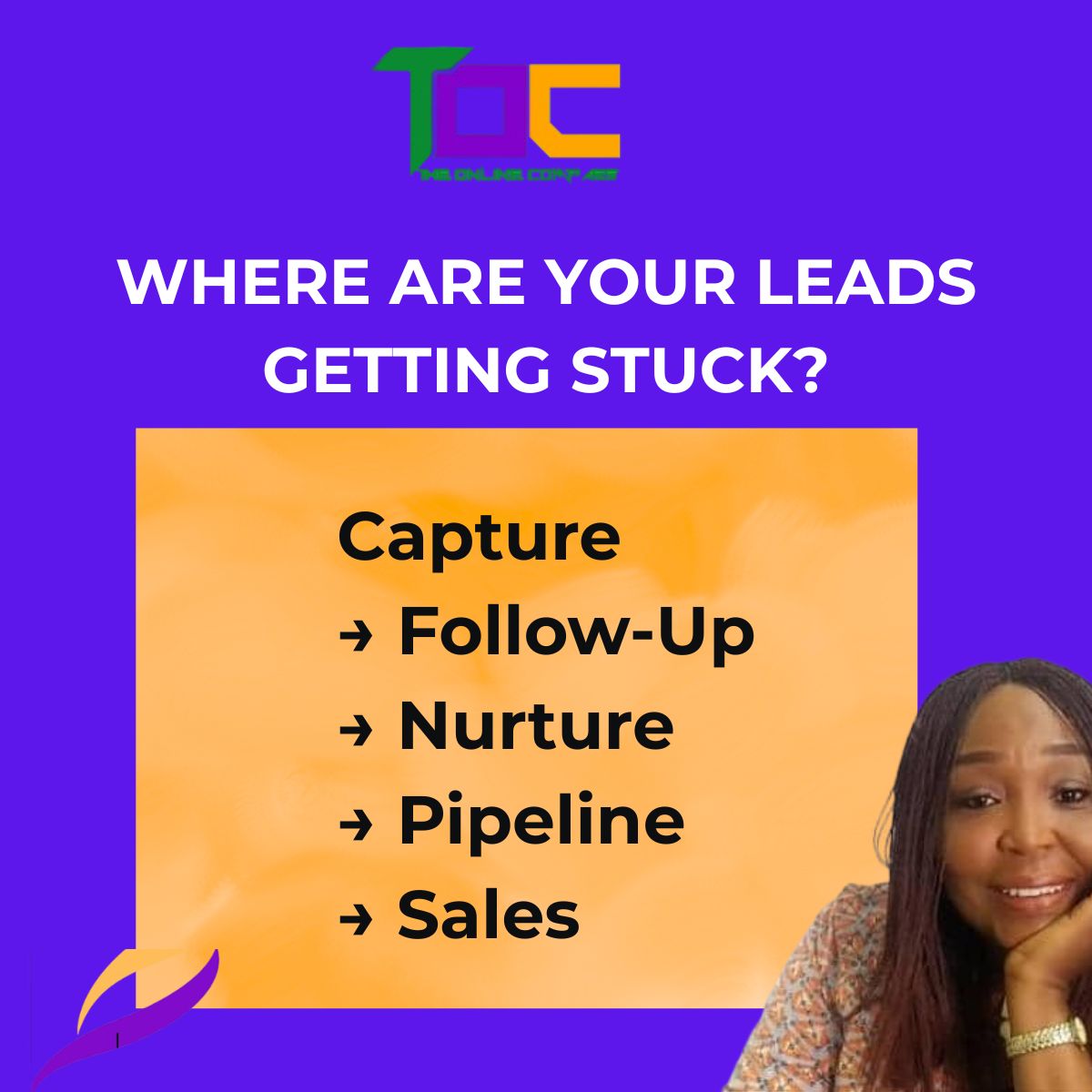
1. The lead comes in, but nobody owns it
Imagine someone contacts your business today.
They ask about your service.
You respond.
Then the conversation gets busy.
Another customer calls.
Another message comes in.
You have a meeting.
The lead gets pushed down your WhatsApp chat.
Three days later, nobody has followed up.
The problem wasn’t lead generation.
The problem was lead ownership and follow-up.
Every lead should have somewhere to go after it enters your business.
Someone should know:
- who the lead is
- what they are interested in
- what stage they are in
- who is responsible for following up
- what the next action should be
Without this, leads can easily disappear.
Getting a lead is one thing. Making sure your website actually turns visitors into inquiries is another.
If you’re getting website traffic but not enough people are taking the next step, I explored that problem in Why Your Website Gets Traffic but Doesn’t Generate Enough Leads.
2. Your leads are living inside WhatsApp
WhatsApp can be extremely useful for business.
But a WhatsApp conversation is not automatically a lead management system.
If all you know about a prospect is that their name is somewhere in your WhatsApp chats, you may have a problem.
What happens when you have 50 enquiries?
Or 100?
Can you quickly see who:
- just made an enquiry?
- requested pricing?
- needs a follow-up?
- attended a call?
- is ready to buy?
- is not ready yet?
- stopped responding?
This is where a CRM or properly structured lead management system becomes useful.
The goal isn’t to make your business complicated.
The goal is to stop important information from getting lost
3. You follow up once and assume the lead is cold
One message doesn’t always tell you whether someone is genuinely interested.
People get busy.
They may need to discuss the purchase with someone else.
They may need time to make a decision.
They may have seen your message and forgotten to respond.
This is why lead nurturing matters.
A prospect who isn’t ready today may still become a customer later.
But if your business has no process for staying connected with interested prospects, you may lose them simply because you stopped communicating.
Follow-up should not depend entirely on memory.
Some parts can be automated.
Some parts should remain personal.
The important thing is that there is a process.
4. You don’t know where each lead is in the sales process
Another common problem is treating every lead the same.
But someone who just downloaded your lead magnet is not necessarily at the same stage as someone who requested a proposal.
And someone who requested a proposal is not at the same stage as someone who has already agreed to buy.
Your sales process should make these differences visible.
For example:
New Enquiry → Qualified Lead → Sales Conversation → Proposal → Decision → Customer
The exact stages will depend on the business.
But there should be a clear way to know where each opportunity currently sits.
Otherwise, you may have leads in your database but no idea what should happen next.
5. You’re not collecting enough information
Sometimes the problem starts with the first interaction.
A form asks only for:
Name + Email + Phone Number
Then the business has to start the entire qualification process from scratch.
For some businesses, that may be fine.
For others, the first interaction should collect useful information about the prospect’s needs.
For example:
- What service are you interested in?
- What problem are you trying to solve?
- What stage is your business currently at?
- What is your timeline?
- What type of support are you looking for?
The point isn’t to create a long, annoying form.
The point is to collect enough information to help the business decide what happens next.
6. Marketing and sales are disconnected
This is another place where leads can disappear.
Marketing generates attention.
Someone becomes interested.
They submit a form.
But what happens next?
If marketing doesn’t connect properly with sales, the lead may sit there waiting.
That is why I don’t look at marketing as simply:
Content → Lead
There is much more after that.
I think about the journey as:
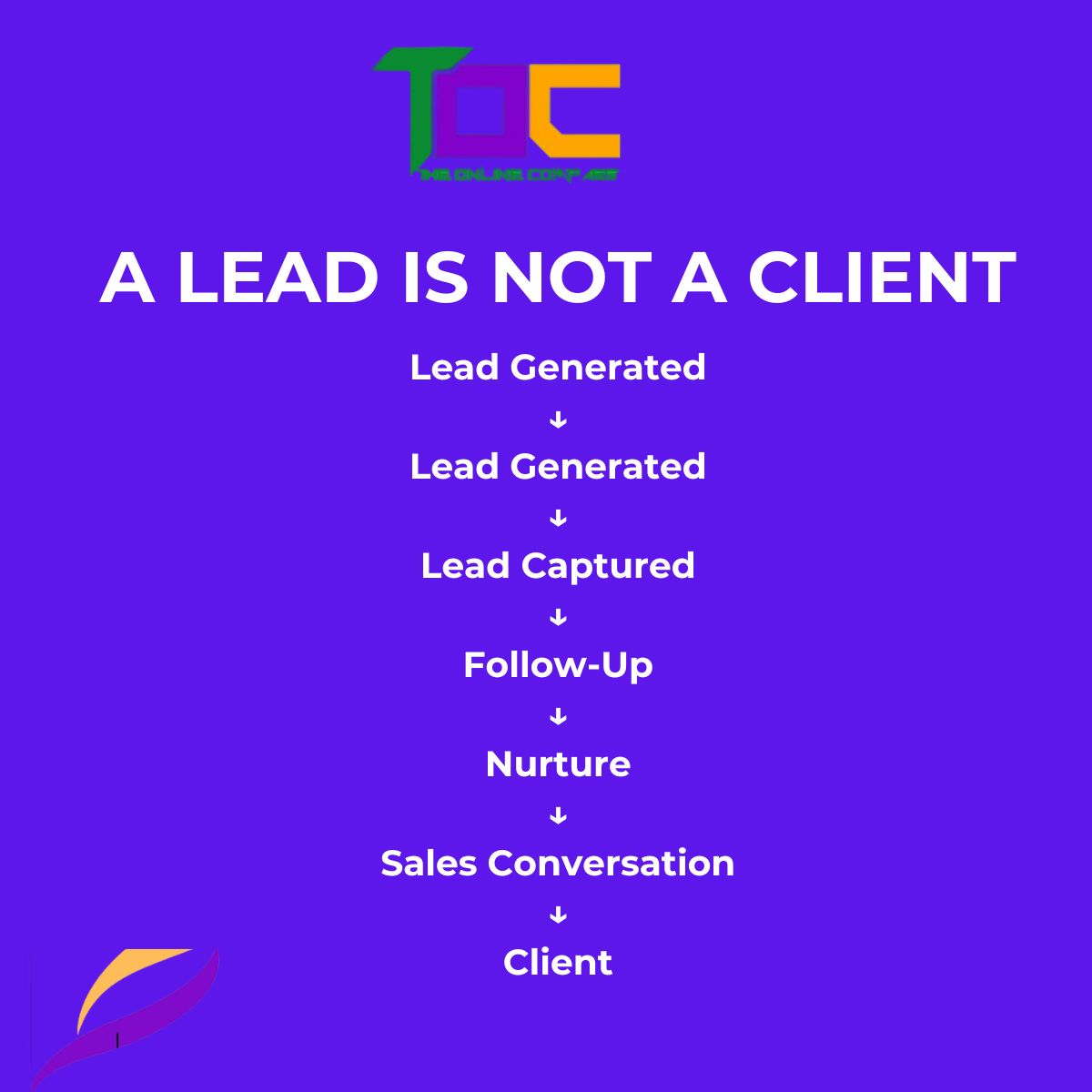
Visibility → Interest → Lead → Follow-Up → Nurture → Sales Conversation → Decision → Customer
Every stage needs a clear next step.
A lead is not the end of your marketing process
This is one of the biggest shifts I want businesses to make.
Don’t think:
“We generated a lead.”
Think:
“We have created an opportunity to start a relationship with a potential customer.”
That changes what you do next.
You begin asking:
Where did this lead come from?
What are they interested in?
What happens immediately after they enquire?
Who follows up?
How quickly?
Where is their information stored?
What happens if they don’t respond?
When should someone from sales step in?
How do we know when the opportunity is lost?
How do we know when it becomes a customer?
Those questions move you from simply generating leads to actually managing a client acquisition system.
If you’re new to the idea of a client acquisition system, I explained how the different stages connect in What Is a Client Acquisition System? A Practical Guide for B2B Businesses.
Understanding the system is important because it makes it easier to see where leads can get stuck, ignored or lost.
What I would check if your leads aren’t converting
If a business told me, “We’re getting leads but they aren’t becoming clients,” I wouldn’t
immediately tell them to generate more leads.
I would first look at the system.
I would check:
- Lead source
Where are the enquiries coming from? - Lead capture
Is information being captured properly? - Response process
What happens immediately after someone enquires? - Follow-up
Is there a consistent process for staying in touch? - Lead qualification
Can the business identify serious opportunities? - CRM
Is there a proper place to manage the relationship? - Sales pipeline
Can the business see what stage each opportunity is in? - Sales process
Does the prospect have a clear path toward making a decision?
Only after looking at these areas would I start asking whether the business actually needs more leads.
Automation can help — but don’t automate everything
This is where marketing automation becomes useful.
You can automate things such as:
- sending a lead magnet
- confirming a form submission
- notifying the right person
- tagging and segmenting leads
- sending nurture emails
- reminding someone about a scheduled call
- moving leads between certain pipeline stages
- triggering follow-up tasks
But automation should not remove the human part of selling.
A good system should help your team know when to step in.
Automation handles repetitive work.
People handle conversations, relationships, objections, decisions and sales.
mation should handle repetitive movement.
For example:
Lead submits form
↓
CRM creates contact
↓
Notification is sent
↓
Welcome email is delivered
↓
Nurture begins
↓
Lead receives appropriate CTA
The human should then spend more time on the conversations that require judgment, trust and expertise.
Automation is not about making a business less human.
Used properly, it can give people more time to be human where it matters.
Your CRM should be more than a contact list
A CRM shouldn’t simply tell you that someone’s name is John and their phone number is 0800…
It should help you understand the relationship.
For example:
John → Downloaded Blueprint → Requested Information → Qualified → Sales Call → Proposal Sent → Follow-Up Required
Now the business can see what is happening.
That is much more useful than scrolling through old conversations trying to remember what happened.
The bigger lesson
Lead generation is only one part of client acquisition.
You can have:
- good content
- a good website
- SEO
- social media visibility
- paid advertising
- a strong offer
and still lose potential customers if the journey after the enquiry is weak.
That is why I keep coming back to infrastructure.
Your marketing creates opportunities.
Your client acquisition infrastructure determines what happens to those opportunities.
Content is fuel. Infrastructure is the engine.
And if leads are entering your business but disappearing before they become customers, the first question shouldn’t always be:
“How do we get more leads?”
It may be:
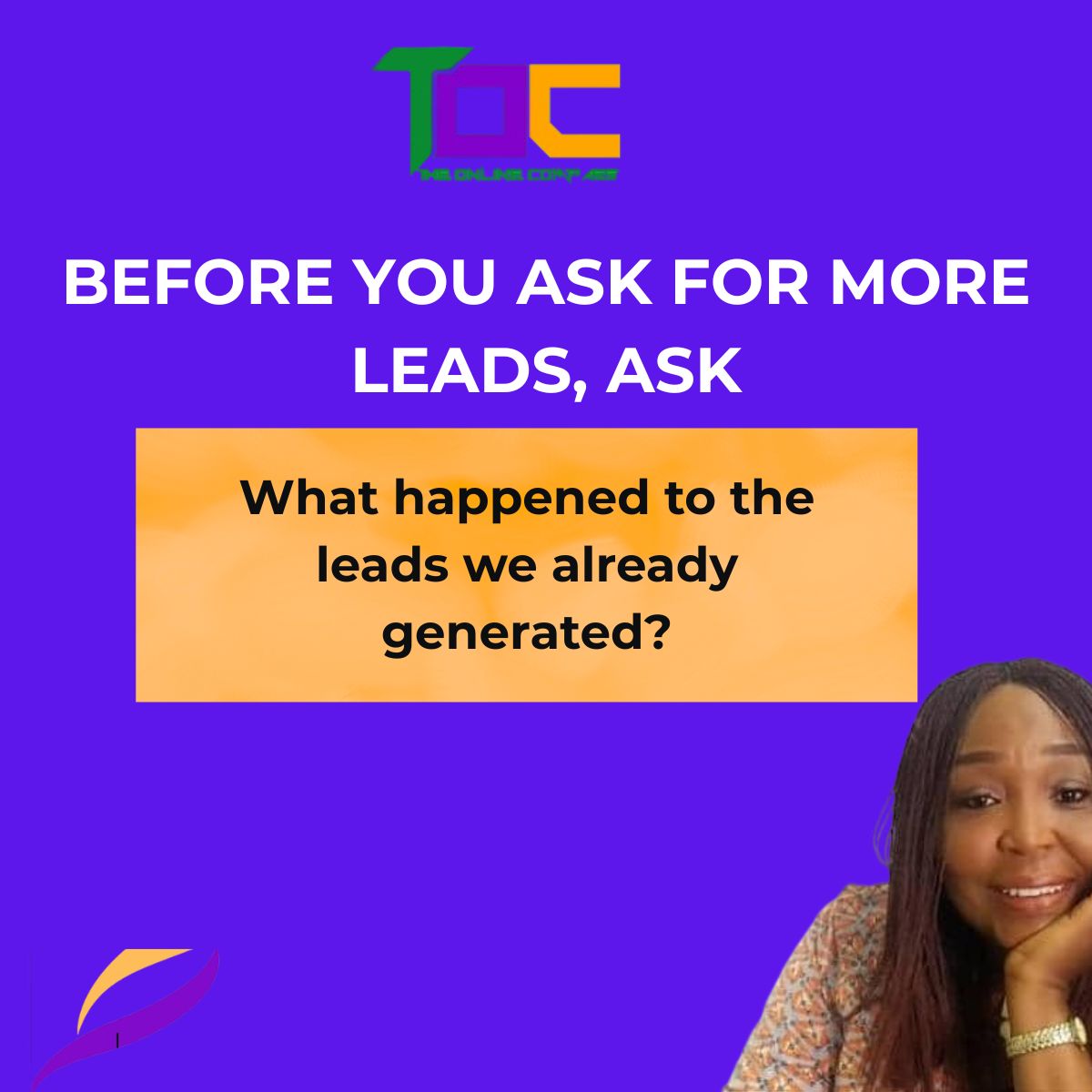
“Why are we losing the leads we already have?”
Generating the lead is only one part of the acquisition process.
Your business also needs an infrastructure for capturing, organizing, following up with, nurturing and converting those leads.
Learn how these pieces connect: How to Build a Client Acquisition Infrastructure That Turns Visibility Into Revenue
Before you generate more leads, check what happens to the ones you already receive
Ask yourself:
- Do we have a clear lead capture process?
- Does every lead have an owner?
- Do we follow up consistently?
- Can we see where each lead is in the sales process?
- Are leads being nurtured when they aren’t ready to buy?
- Do we have a CRM or reliable lead management process?
- Can we track enquiries from first contact to customer?
- Does our sales process have a clear next step?
If several of these answers are unclear, generating more traffic may not solve the real problem.
You may simply create more leads for a system that is already losing them.
Want to see where your system is leaking?
I created the Client Acquisition Infrastructure Audit to help businesses examine the journey from visibility and lead generation through lead capture, follow-up, CRM, sales pipeline and conversion.
It helps you identify the gaps before you start throwing more traffic, content or advertising at the problem.
Start by finding the leak. Then fix the system.
What to Read Next
Once you understand why leads can disappear, the next question is:
What should actually be automated in your client acquisition process?
Read What Should You Automate in Your Client Acquisition Process? to understand where automation
can remove repetitive work without removing the human side of selling.

Eki Ayemenre
Founder & Lead Strategist at The Online Compass Digital Marketing Agency and a B2B Client Acquisition Infrastructure Strategist.
She helps B2B businesses build connected systems that turn visibility into leads, sales, and revenue.
Connect with Eki n LinkedIn → Eki Ayemenre

Pin this
Share on Pinterest
